Return to All Insights
The Geology of Marble: How Nature Engineers a Timeless Stone
Bao Kien Stone Technical Department
Case Studies
Natural marble carries a kind of authority that no manufactured surface can fully replicate, and the reason lies in its formation. Every slab is the end result of a geological process spanning millions of years, deep within the earth's crust. Understanding that process — how limestone becomes marble, what causes its signature veining, and how its mineral structure behaves in daily use — helps architects and homeowners specify it with more confidence and care for it more effectively once installed. At Bảo Kiên, this geological knowledge informs every block we select and process.


From Limestone to Marble: The Metamorphic Journey
Marble begins its life as limestone, a sedimentary rock formed largely from calcium carbonate. When that limestone is buried deep within the earth and subjected to intense heat — typically in the range of 500 to 800 degrees Celsius — combined with immense pressure, its original mineral grains recrystallize into a dense, interlocking mosaic of calcite crystals. This transformation, known as metamorphism, erases the original sedimentary texture and any fossil traces, replacing them with the crystalline structure that gives marble its characteristic sparkle and its ability to take a high polish. Dolomitic marble follows a related path, forming instead from dolostone.
Reading the Rock: What Veining and Color Actually Reveal
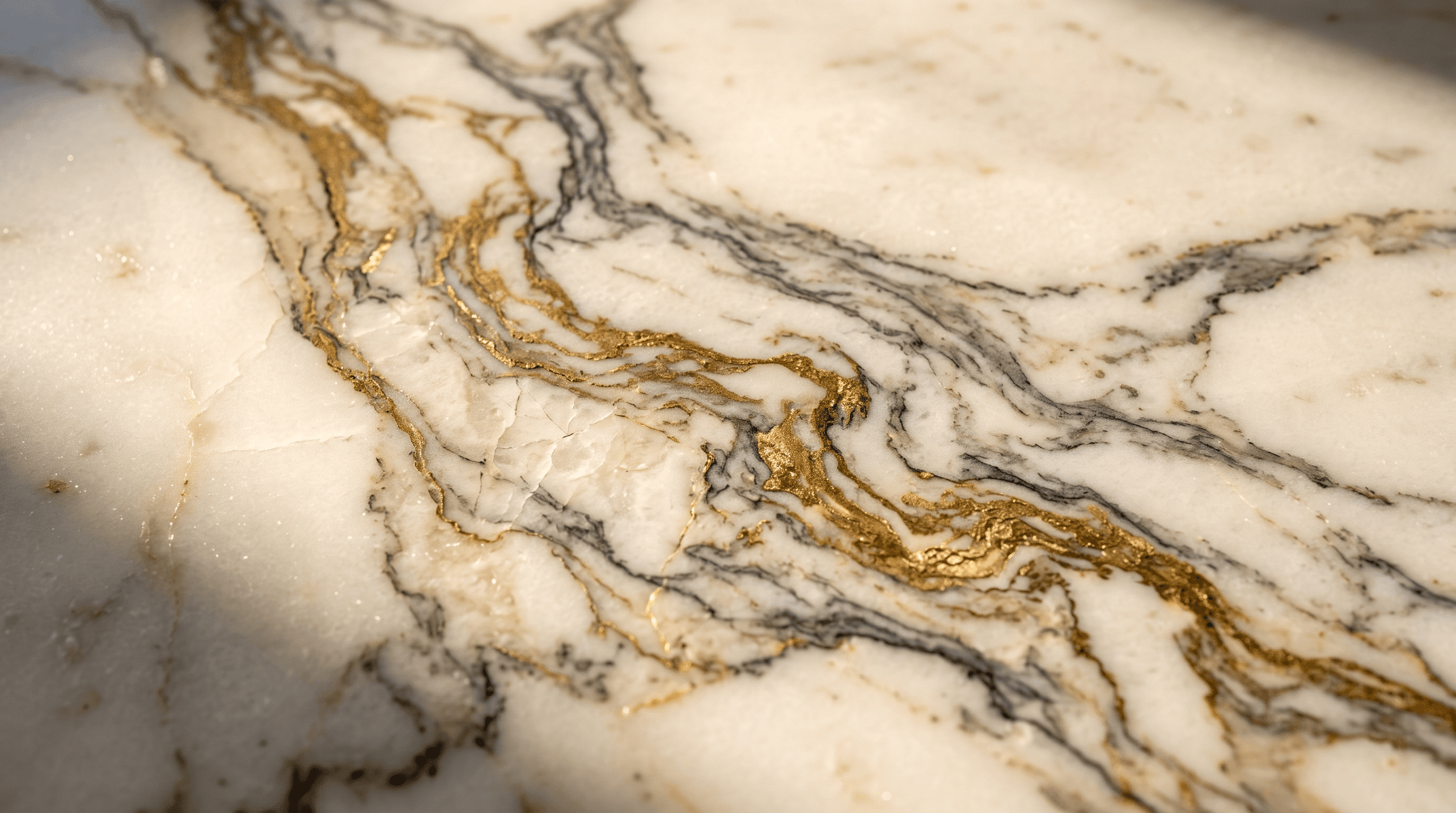
Pure marble, made almost entirely of calcite, tends to emerge bright white. The dramatic veining and color variation prized in decorative marble come from mineral impurities present in the original limestone — trace clay minerals, iron oxides, mica, or graphite — which recrystallize alongside the calcite and trace the path of ancient geological movement. In effect, every vein in a slab of marble is a visible record of the specific conditions under which that stone formed: the temperature it reached, the minerals present, and the pressures it endured. This is why no two marble blocks, even from the same quarry, are ever truly identical, and why designers often treat a marble slab as a singular, unrepeatable material.
Hardness, Porosity, and the Science of Everyday Care
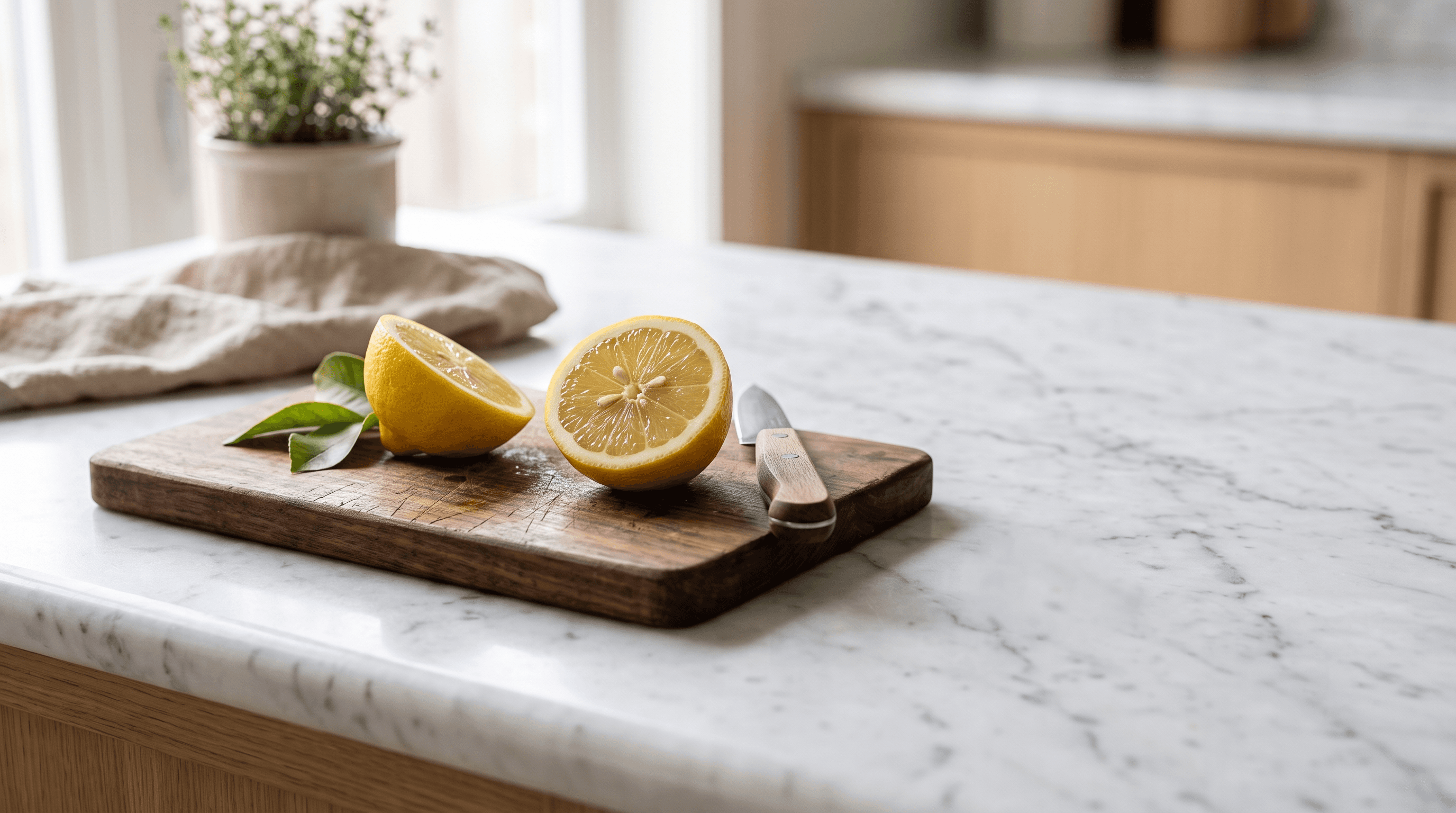
Marble rates around 3 on the Mohs hardness scale, notably softer than engineered quartz or granite, which is what allows it to be shaped and polished with such precision but also makes it more prone to scratching and etching. Its calcite composition also means it reacts to acidic substances like lemon juice, vinegar, or wine, which can dull the polished surface on contact — a characteristic distinct from staining and one that sealing and prompt cleaning can largely prevent. On the other hand, high-quality marble typically has very low porosity, often less than one percent by mass, which contributes to its long-documented durability in flooring and cladding applications when properly maintained. These are trade-offs, not flaws: understanding them is what allows a design team to place marble where its strengths matter most.
Why Millions of Years of Geology Still Matter in Modern Design
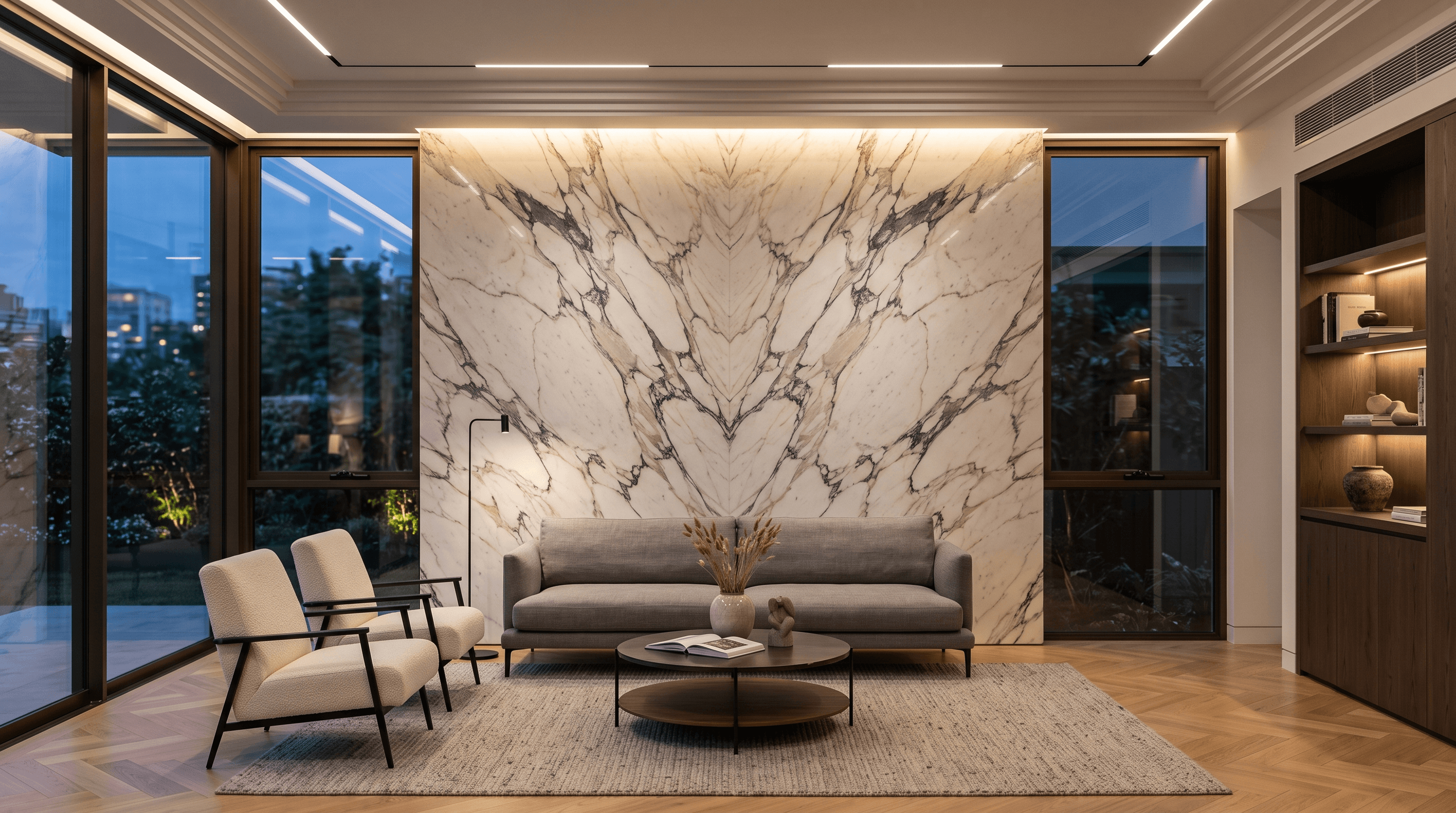
Marble's geological origin is precisely what makes it irreplaceable in architecture: a material record, laid down over geological time, that no factory process can fully replicate. That authenticity is also why sourcing and processing matter so much — how a block is cut, matched, and finished determines whether its natural veining reads as a coherent, deliberate design feature or a disjointed pattern across a room. At Bảo Kiên, our marble processing is built around respecting this geological story: selecting blocks carefully, book-matching veining where it matters, and finishing each surface in a way that lets millions of years of natural formation read clearly in the final space.
Share Insight:


