Return to All Insights
Stone Reimagined: The Architectural Trends Shaping Interiors in 2026
Bao Kien Design Department
Architectural Trends
Architecture in 2026 is being defined by a quiet but decisive shift: surfaces are no longer chosen for looks alone. Architects, interior designers, and homeowners are now weighing durability, sustainability, and long-term visual performance alongside aesthetics. Natural stone and engineered quartz sit at the heart of this conversation, offering the tactile richness of the earth combined with the precision of modern manufacturing. At Bảo Kiên, where artificial quartz craftsmanship meets expert natural marble processing, we see these trends unfold daily on the fabrication floor. Here are five movements shaping architectural spaces this year — and how the right stone can help bring each one to life.


Warm, Earthy Palettes Replace Cool Neutrals
The cool greys and stark whites that dominated the last decade are giving way to warmer, more grounded tones. Taupe, sand, creamy beige, and soft caramel hues are now the foundation of choice for both residential and commercial interiors, often paired with warm wood cabinetry and matte metal fixtures. Deeper accent tones — burgundy, forest green, and amber — are being used sparingly to create focal points rather than dominate a room. This palette shift reflects a broader design mood: spaces that feel inviting, organic, and calming rather than clinical. Bao Kien's quartz collections and processed marble selections are developed with exactly this direction in mind, giving designers a dependable warm-toned base to build around.
Large-Format Slabs and Seamless Continuity
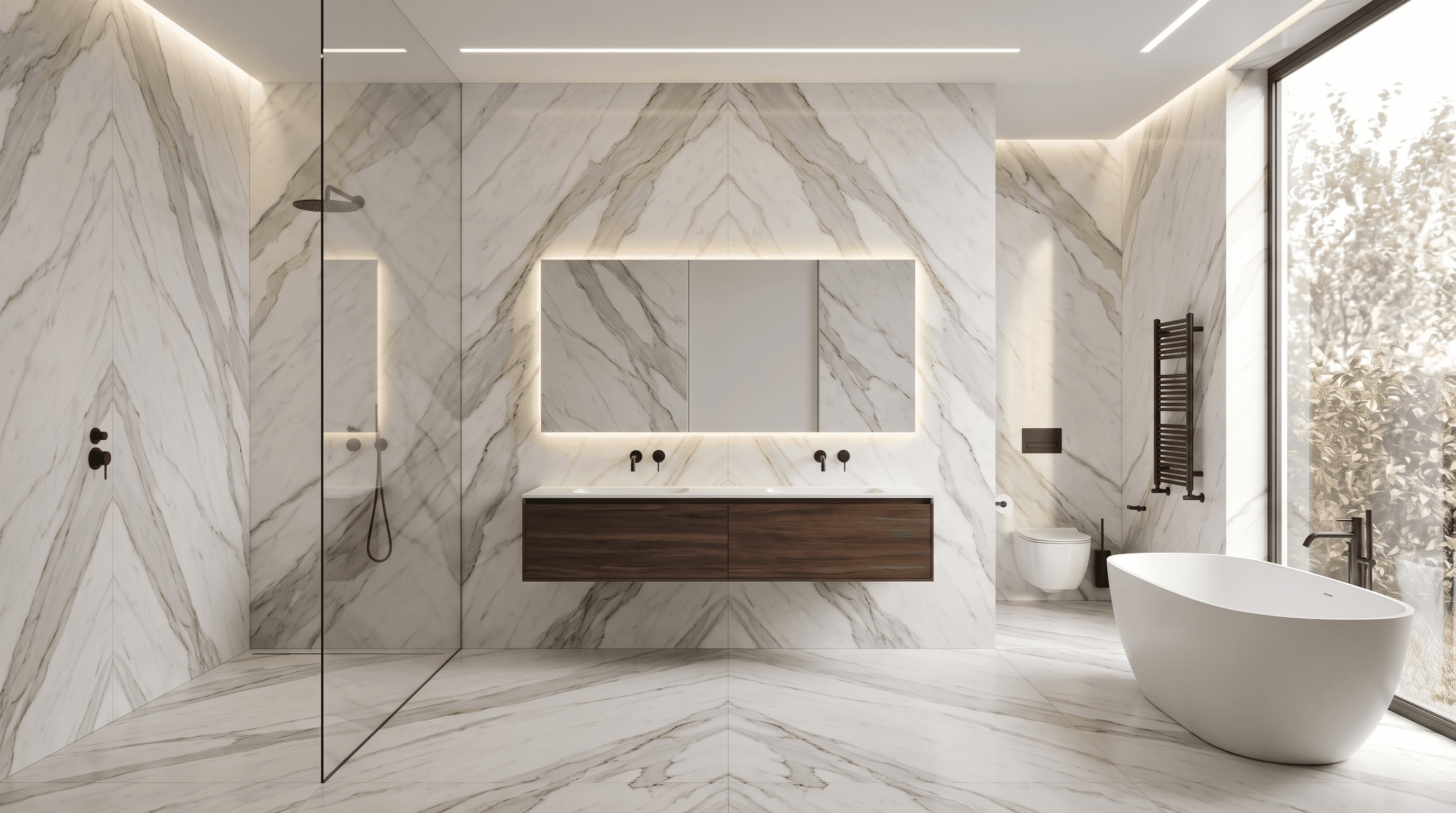
Homeowners and architects alike are moving away from small tiles and visible grout lines in favor of large-format slabs that create a clean, uninterrupted surface. Oversized quartz and marble panels are now common across kitchen islands, bathroom walls, and feature fireplaces, where continuity of veining and color amplifies a sense of scale and craftsmanship. This trend places new demands on fabrication precision — slab matching, cutting accuracy, and finish consistency all become critical when a single surface spans an entire wall. It is an area where controlled manufacturing processes, like those used for engineered quartz, offer a distinct advantage over material that varies naturally block to block.
Texture Takes Over From High Gloss
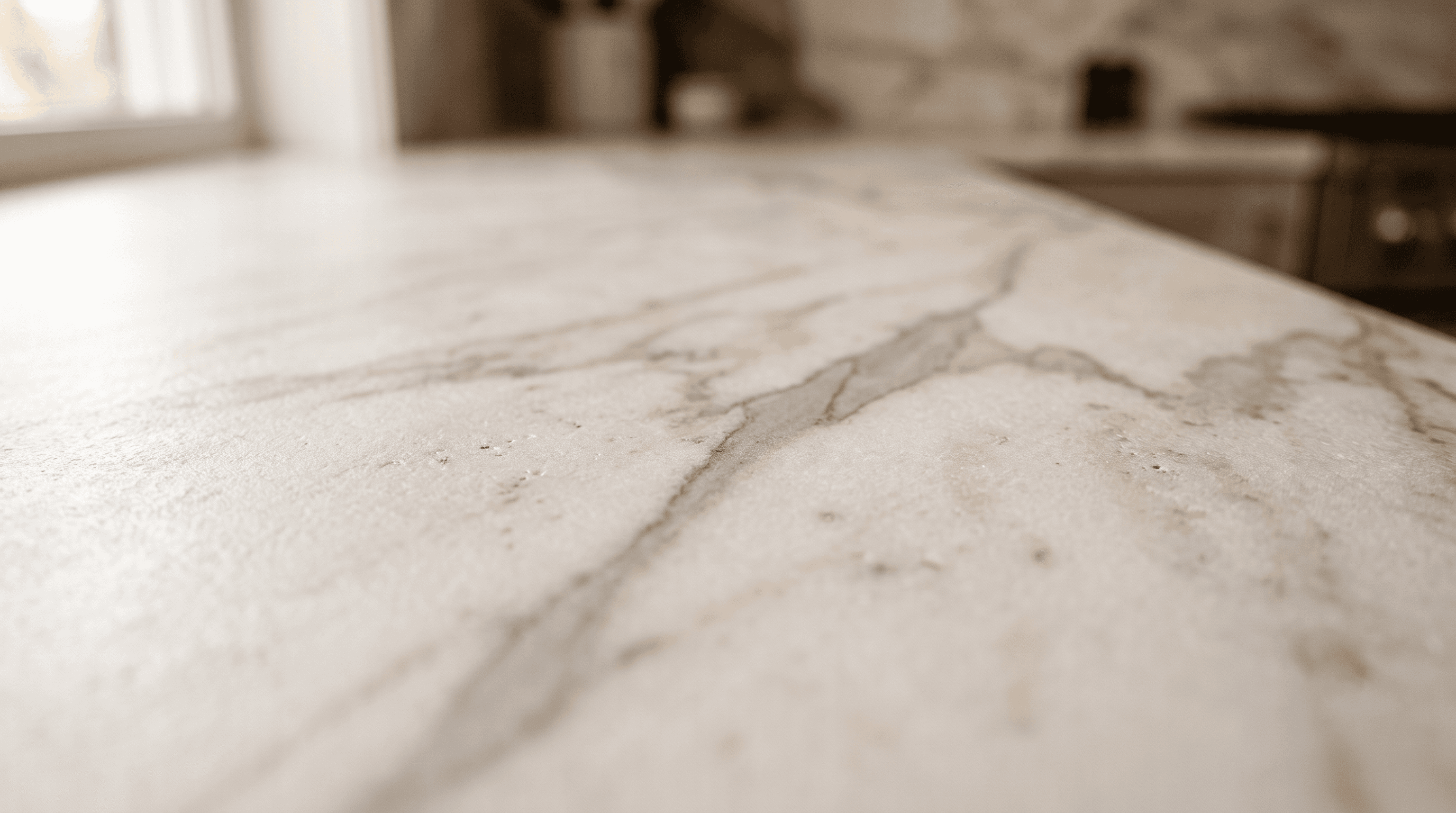
Glossy, mirror-like finishes are no longer the automatic default. Honed, matte, and softly textured surfaces are increasingly specified because they feel more tactile underfoot and at the touchpoint, hide fingerprints and daily wear more gracefully, and let veining read as softer and more natural. This is particularly visible in spa-inspired bathrooms and hospitality interiors, where a muted, textured stone finish contributes to a calmer, more intimate atmosphere. Both natural marble and engineered quartz can be finished this way, giving designers flexibility to match texture to the mood of each space.
Sustainability Becomes a Genuine Specification Criterion
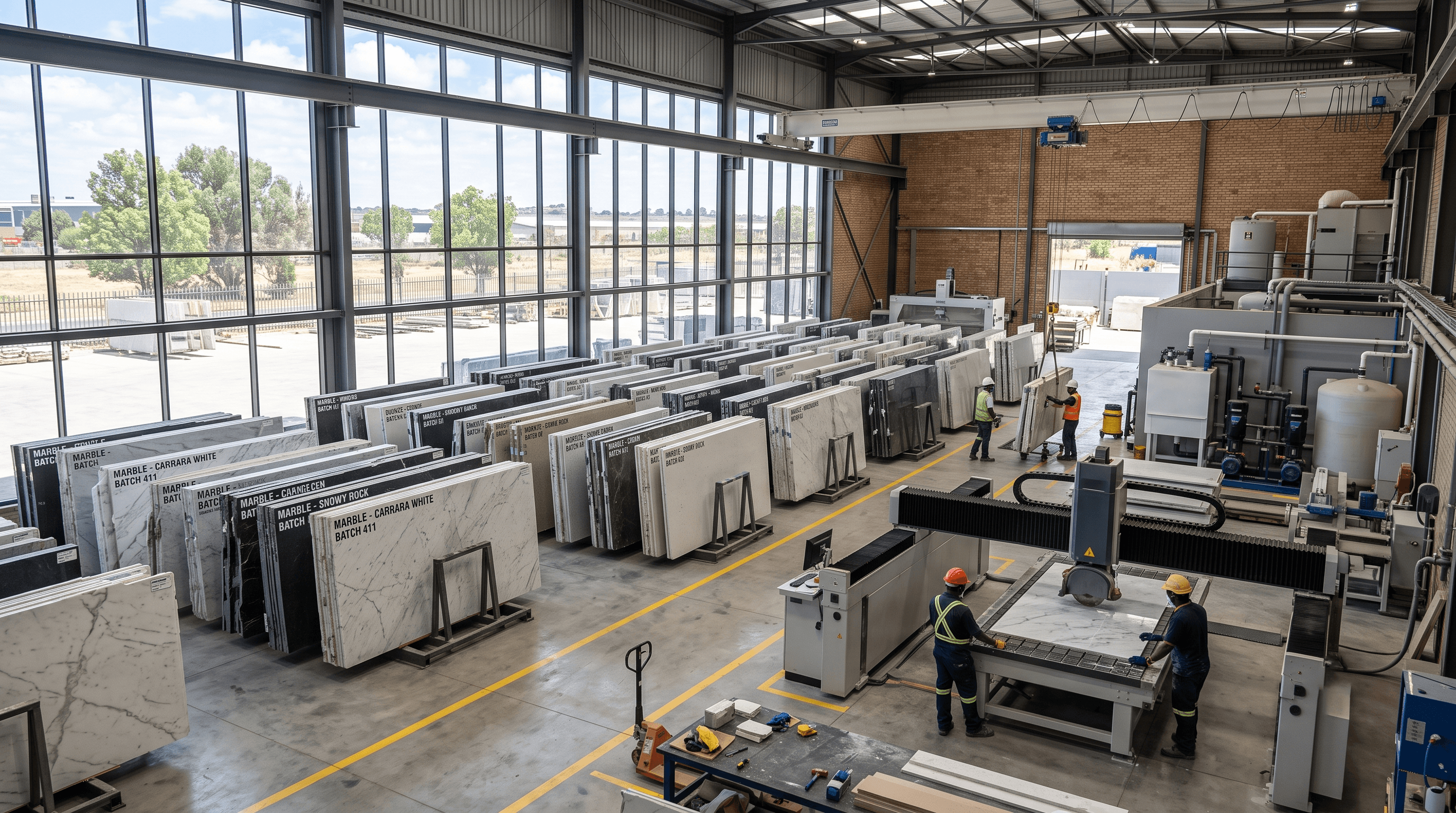
Environmental performance has moved from a marketing talking point to a real specification requirement, particularly for commercial projects pursuing green building certification. For natural stone, this means closer attention to quarrying practices, water recycling, and material longevity — a well-maintained marble installation can last many decades, reducing long-term replacement waste. For engineered quartz, it means more responsible resin use and transparent reporting on material composition. Designers today are increasingly asking manufacturers not just how a surface looks, but how it was made and how long it will last — a question the stone industry, including Bao Kien, is answering with more transparent production standards.
Engineered Quartz Matures as a Design-First Material
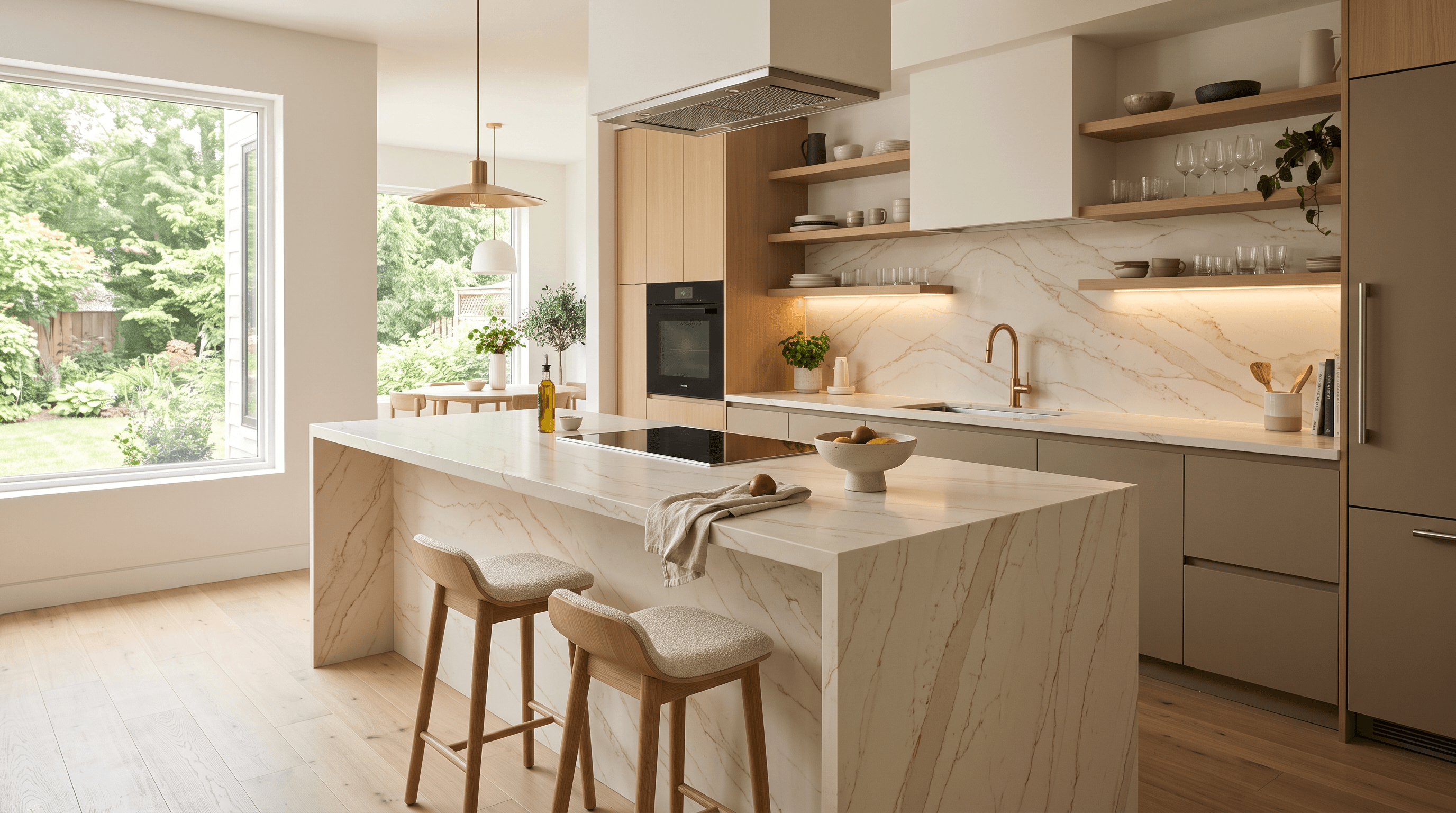
Engineered quartz has firmly established itself as a leading surface choice for kitchens, bathrooms, and commercial interiors, prized for its near-zero porosity, consistent performance, and resistance to staining and heat. What has changed in 2026 is its design ambition: quartz collections now replicate the movement and depth of natural marble with controlled, calibrated veining, while also offering original patterns natural stone cannot produce. This combination of engineered reliability and design flexibility is why architects increasingly specify quartz not as a budget alternative to marble, but as a deliberate design choice in its own right — a philosophy central to how Bao Kien develops its quartz surface collections.
Share Insight:


