Return to All Insights
The Material Science of Engineered Quartz: Precision Manufactured for Performance
Bao Kien Stone Technical Department
Material Science
When a designer specifies engineered quartz, they are choosing a composite material engineered at the molecular level, not simply a stone-look surface. Every slab is the product of carefully controlled mineral chemistry, industrial-scale compression, and precise thermal curing. Understanding that process — what the material is made of, how it is formed, and why its properties hold up over decades of use — helps architects, fabricators, and homeowners make more informed choices. At Bảo Kiên, this science sits at the center of how our quartz collections are engineered and produced.


What's Actually in an Engineered Quartz Slab
Engineered quartz is typically composed of roughly 90 to 95 percent ground natural quartz crystal, bound together by 5 to 10 percent polymer resin along with pigments and performance additives. The quartz component — crystalline silicon dioxide — is prized because it is one of the hardest and most chemically stable minerals commonly available, rating 7 on the Mohs hardness scale. Manufacturers grade this quartz aggregate carefully by particle size and purity, since even small impurities such as iron oxide can affect color clarity and long-term stability. The resin, though a small percentage of the mix, does significant structural work: it acts as the binder that holds the quartz particles together and gives the finished slab flexibility and impact resistance that raw stone lacks.
Vacuum, Vibration, and Heat: How the Slab Is Made
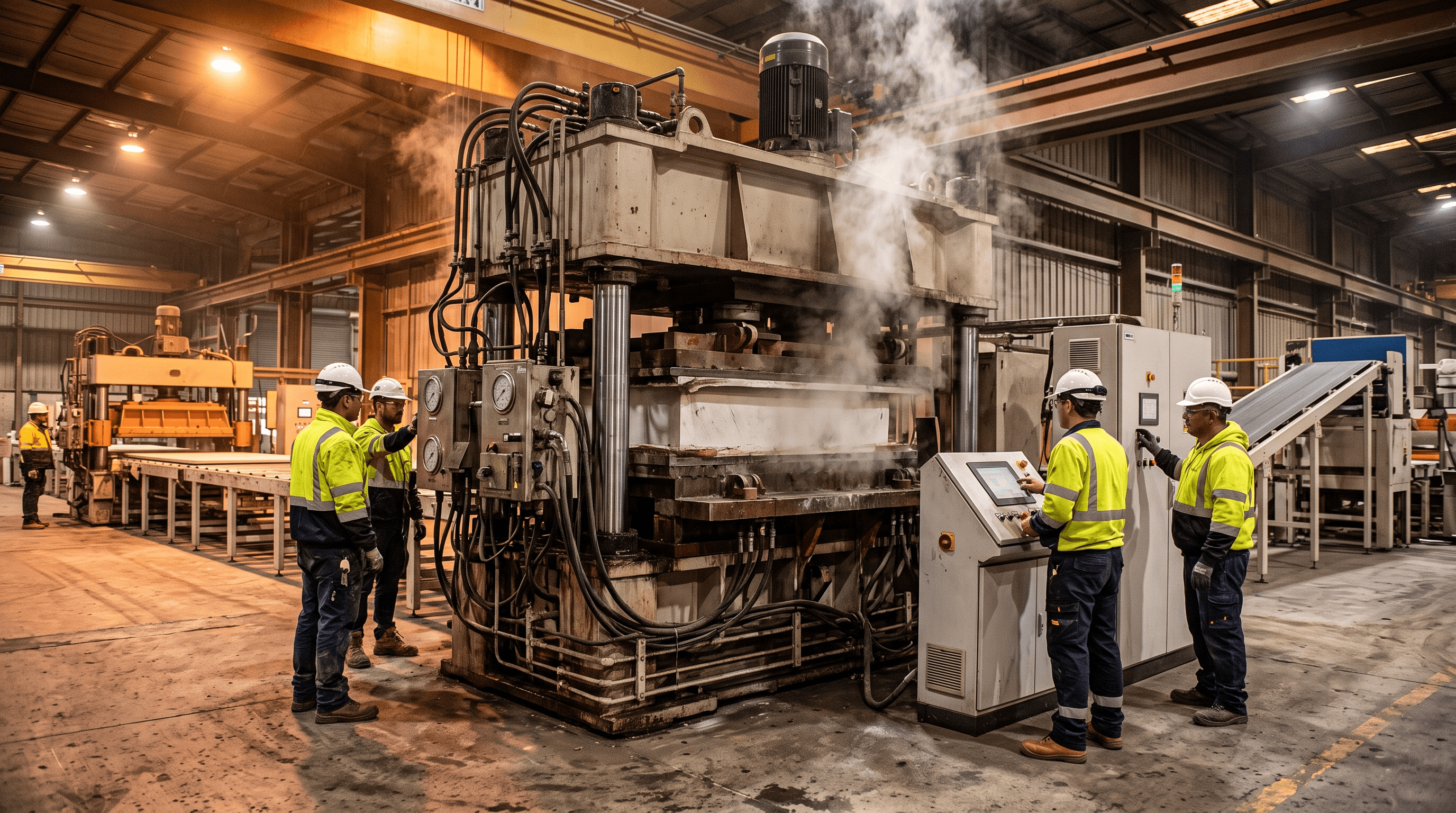
The manufacturing process is what separates engineered quartz from any naturally occurring stone. The quartz-resin mixture is poured into molds and compacted under vacuum while being vibrated, a step that forces out trapped air and compresses the material under substantial pressure. This vacuum-vibro-compression process is the reason engineered quartz ends up virtually non-porous — there are simply no air pockets left for moisture, bacteria, or staining liquids to penetrate. The compacted slabs are then cured in a kiln at controlled high temperatures, which hardens and permanently bonds the resin matrix to the quartz aggregate. Only after curing are slabs calibrated to precise thicknesses and polished through multi-stage grinding to achieve the final finish.

Why Hardness Alone Doesn't Tell the Full Story
A Mohs rating of 7 is often cited as proof of quartz's durability, and it does mean the surface resists scratching from most kitchen tools and daily use. But hardness measures resistance to scratching, not overall toughness. Engineered quartz, like the natural mineral it's derived from, can still chip on sharp impact because of its underlying fracture pattern, and its resin content means it is more sensitive to extreme, sustained heat than raw quartz crystal alone would be. Real-world performance depends on the interaction of several properties at once — scratch resistance, impact resistance, thermal shock resistance, and chemical resistance — all of which are shaped as much by manufacturing quality as by the raw hardness number on a data sheet.
From Lab to Living Room: What the Science Means for Design
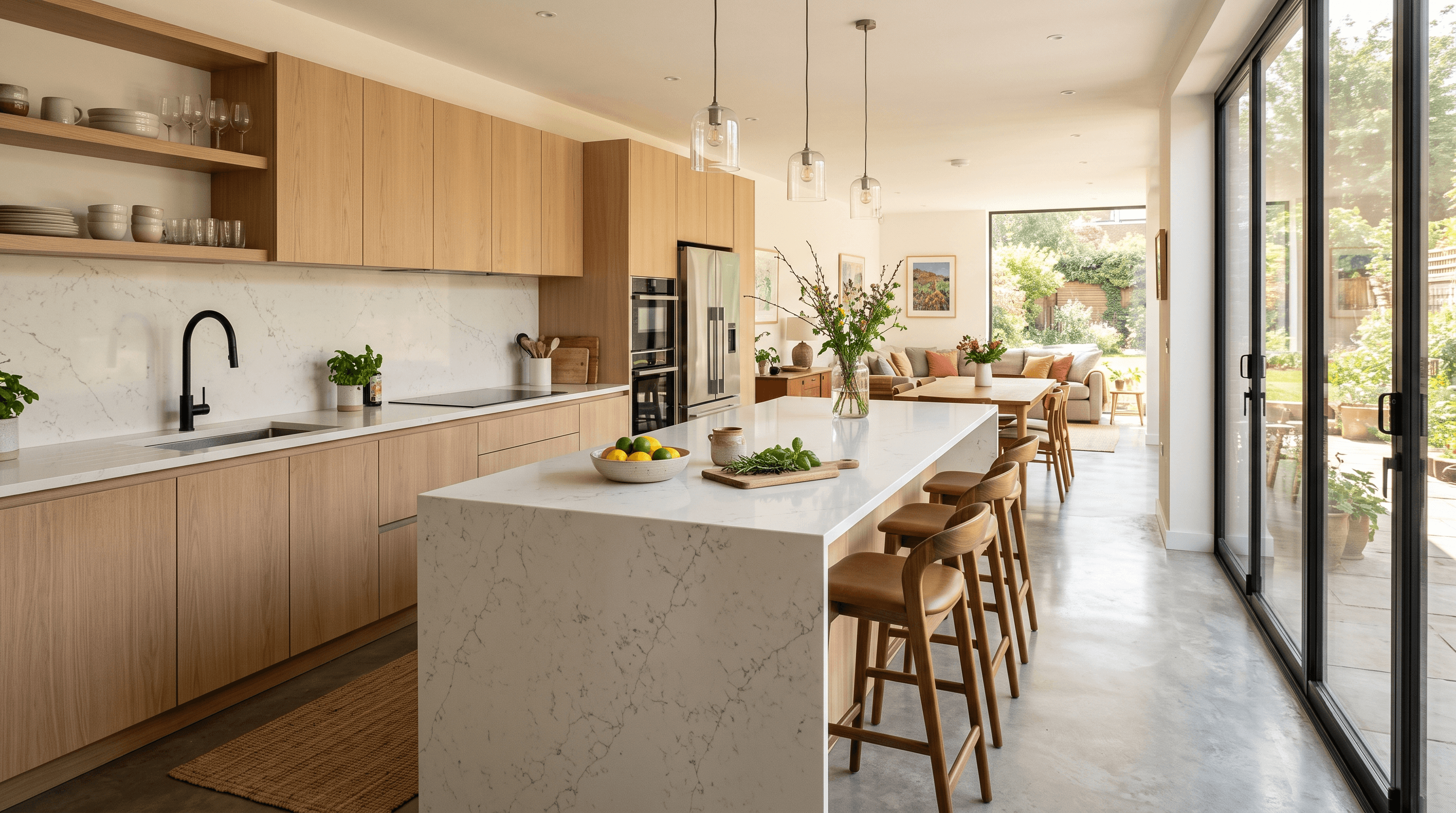
For designers and homeowners, this material science translates into practical advantages: a non-porous surface that never needs sealing, color and pattern consistency across an entire production batch, and predictable performance that varies far less than natural stone from block to block. It also means the design possibilities are engineered rather than purely discovered — pigments and particle blends can be tuned to recreate the depth of natural marble veining or to create entirely original patterns that no quarry could produce. Understanding this science is what allows Bảo Kiên to guide project teams toward the right quartz specification for each application, from residential kitchens to high-traffic commercial floors.
Share Insight:


